 Blog Home
Company Buying Signals: How to Track Enterprise Interest
Learn how to identify and track company buying signals that reveal when enterprises are ready to purchase, helping you close deals faster and prioritize leads

Our most recent articles
A procurement manager saves a product configuration on Monday. An engineer from the same company reviews technical specifications three times over the next week. A finance approver requests a formal quote on Friday.
Each action looks isolated in your analytics dashboard. But when you zoom out, a pattern emerges: three stakeholders from the same organization are moving through a coordinated buying process.
This is the reality of enterprise commerce. B2B purchases don't happen in a single session. They unfold across weeks, involve multiple decision-makers, and leave fragmented digital footprints that most merchants never connect.
The brands that win in B2B are the ones that can stitch these signals together.
What Are Company Buying Signals?
Company buying signals are aggregated user-level behaviors that indicate an enterprise account is moving toward a purchase decision.
Unlike individual consumer signals, which reflect a single person's intent, company buying signals require pattern recognition across multiple stakeholders within the same organization. A procurement team member might save a product list for internal review. An engineer might download specification sheets to compare technical requirements. A finance director might initiate a quote request to validate budget allocation.
Each action is a discrete data point. Together, they form a narrative of organizational readiness.
Company buying signals are a subset of broader purchase intent patterns, but they require aggregation across multiple users within the same organization. The challenge is that most commerce platforms track sessions and devices, not the human decision-making structures behind enterprise purchases.
When you can see that four users from the same email domain have engaged with your product catalog within a two-week window, you are no longer guessing about interest. You are observing a buying committee in action.
Why Company Buying Signals Are Hard to Track
Enterprise buying cycles span longer on average and involve multiple stakeholders.
During the consideration window, individual users switch between office desktops, mobile devices during commutes, and tablet reviews at home. Traditional session-based tracking treats each interaction as disconnected, resetting the context every 24 hours when cookies expire.
Account-based marketing tools show company-level engagement metrics. You can see that "Acme Corporation" visited your site 12 times last month. But you cannot see that the procurement manager viewed pricing pages, the engineer downloaded CAD files, and the VP of operations never engaged at all.
Traditional buying signals work for individual consumers, but enterprise tracking demands a different approach. The distributed nature of B2B decision-making means that no single user holds the full picture. One person researches features. Another validates compatibility. A third secures budget approval.
Privacy regulations have made this harder. GDPR and Apple's ATT framework have rendered third-party cookies useless for tracking cross-session behavior. B2B merchants can no longer rely on retargeting pixels or vendor-supplied intent data to follow enterprise buyers across the web.
The only reliable path forward is capturing explicit signals directly on your own site.
The 5 Company Buying Signals That Predict Enterprise Purchases
1. Multiple Users from the Same Domain Viewing Similar Products
When three or more users from the same company IP address or email domain browse the same product category within a short timeframe, it signals internal discussion.
This pattern indicates that someone has circulated a link internally, or that a team has been tasked with researching a specific solution. The behavior is too coordinated to be coincidental.
Merchants can track this by clustering activity based on email domain or IP ranges. CRM enrichment tools can append company data to anonymous sessions, revealing that seemingly isolated visitors are actually part of the same enterprise account.
When multiple stakeholders exhibit similar intent signals, it indicates internal alignment. The procurement manager might be the one who fills out the contact form, but the research phase involved a much larger group.
2. Saved Product Lists and Configurations
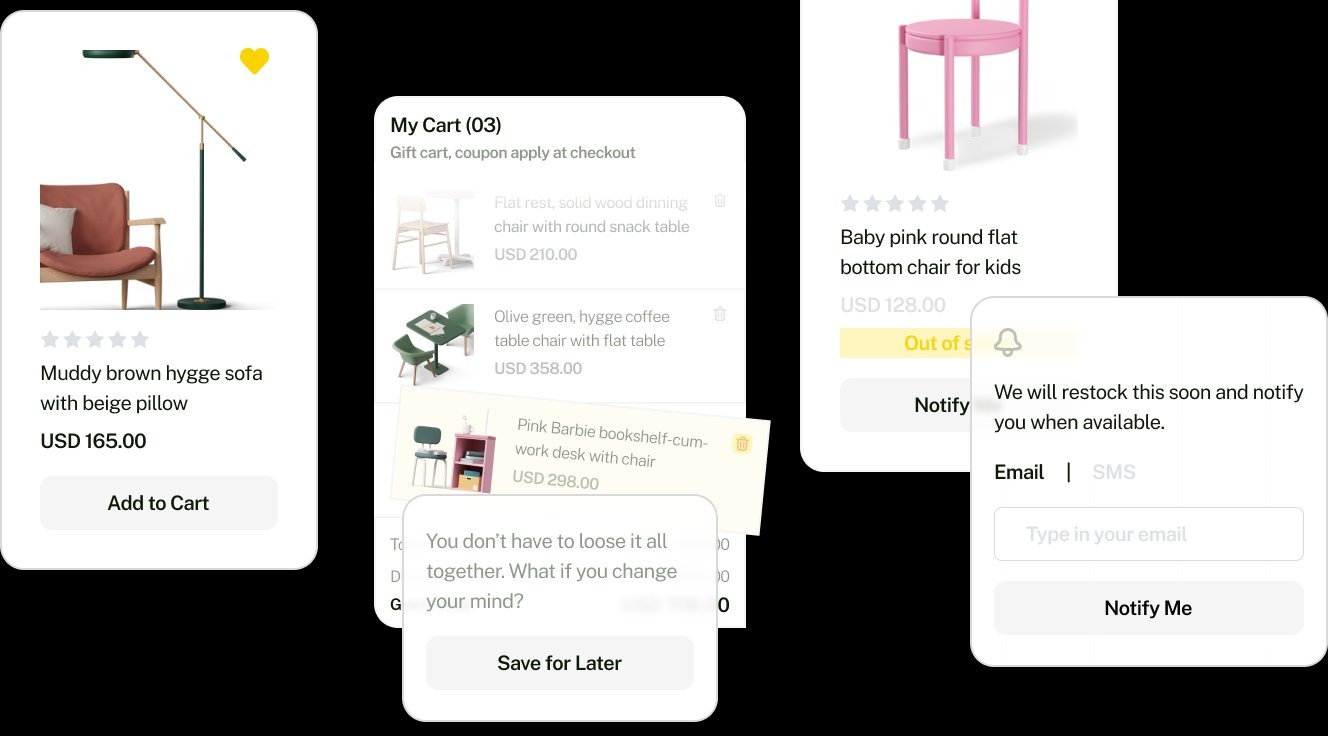
In B2B environments, saved lists function as internal selling documents. The procurement manager curates a selection of products, attaches it to a budget request, and circulates it for approval. The list becomes the artifact around which the buying committee makes its decision.
This is one of the highest-fidelity signals available because it requires deliberate action. The user has moved beyond passive research and into active curation.
Merchants who enable list-building features gain visibility into what specific products are under consideration, which configurations matter most, and how long the approval process is taking. When a saved list sits dormant for two weeks and then suddenly generates activity from a new user at the same company, it means the proposal has moved up the approval chain.
3. Alert Subscriptions for Stock or Pricing Updates
Enterprise buyers operate within constrained budgets and procurement windows. They cannot always buy immediately, even when they have identified the right product.
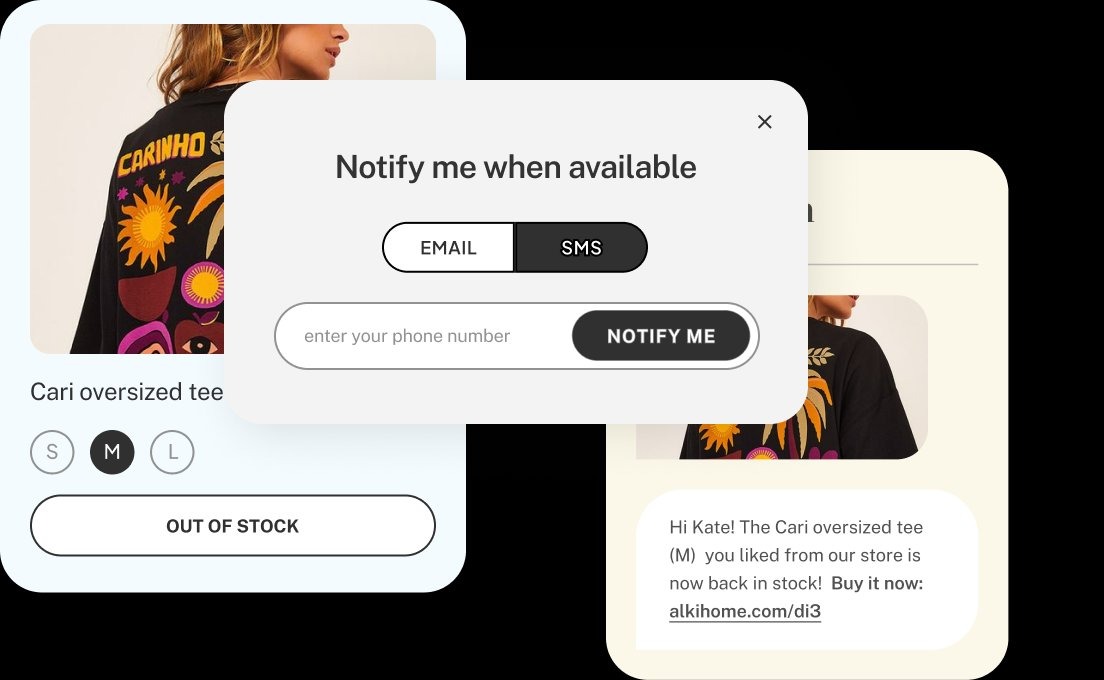
When a user subscribes to a back-in-stock or price drop alert, they are signaling forward-looking intent. They have completed their research, secured internal alignment, and are now waiting for the right conditions to execute the purchase.
These alerts function as automated B2B buying signals that keep the merchant relevant throughout the buying cycle. The procurement manager does not need to manually check your site every week to see if inventory has been replenished or pricing has improved. The system notifies them when the conditions they specified are met.
This reduces the cognitive load on the buyer and ensures that your brand remains top-of-mind when they are ready to convert. Alerts also provide merchants with a clear trigger for sales outreach. When an enterprise account has three active alerts, it is time for your sales team to engage.
4. Repeat Visits to Spec Sheets and Documentation
Enterprise purchases require technical validation. Engineers and technical evaluators download specification sheets, review compatibility matrices, and compare product variants against internal requirements.
Repeat visits to documentation pages indicate that the buyer is performing due diligence. They are not casually browsing. They are building a technical case for procurement approval.
Merchants can track this behavior by gating high-value content behind email captures or by monitoring engagement with embedded technical resources. PDF downloads, video views, and time spent on data sheets are all indicators of serious evaluation.
When multiple users from the same company repeatedly access the same technical documentation, it suggests that the buying committee is coordinating its research. One person downloads the spec sheet. Another reviews the installation guide. A third cross-references the compatibility chart.
This collective behavior is invisible if you only track company-level pageviews. User-level tracking reveals the roles and responsibilities within the buying committee.
5. Quote Requests and Budget Approval Workflows
Quote requests are the clearest high-intent signal in B2B commerce. They indicate that the buyer has completed research, secured internal alignment, and is ready to move into negotiation.
When a user initiates a quote request or adds items to a formal approval workflow, they are no longer exploring options. They are executing a procurement process.
Merchants should treat these signals as immediate handoff points to sales teams. A quote request from an enterprise account should trigger automated notifications to the account owner, along with a summary of all prior engagement from users at that company.
Budget approval workflows are even more valuable because they reveal internal processes. If your platform integrates with enterprise procurement systems, you can see when a saved configuration has been submitted for budget review, who the approvers are, and how long the approval cycle typically takes.
This visibility allows merchants to time follow-up outreach precisely, reaching out when the buyer is most likely to need additional information or negotiation support.
How to Capture Company Buying Signals Without Third-Party Cookies
Zero-party data is the only scalable foundation for B2B signal tracking in a privacy-first world.
Unlike third-party cookies, which track users passively across the web, zero-party data is information that users deliberately share with you. Saved product lists, alert subscriptions, and quote requests are all examples of zero-party data. The user has taken an explicit action that signals their intent.
This data is reliable, compliant with privacy regulations, and owned entirely by the merchant. It does not degrade when browsers block cookies or when platforms change their tracking policies.
First-party tracking complements zero-party data by capturing on-site behavior. Product views, time on page, and category browsing patterns provide context around the explicit signals. When a user saves a product to a list, their browsing history reveals how they discovered it, what alternatives they considered, and how long they spent evaluating specifications.
Company Buying Signals with Swym
Swym's architecture supports user-level intent capture within company accounts without requiring merchants to deploy a separate ABM platform or CRM overlay.
The system tracks explicit actions such as saved product lists, back-in-stock alert subscriptions, and configuration saves at the individual user level. When multiple users from the same email domain engage with these features, the platform aggregates their signals into an account-level view that sales teams can monitor.
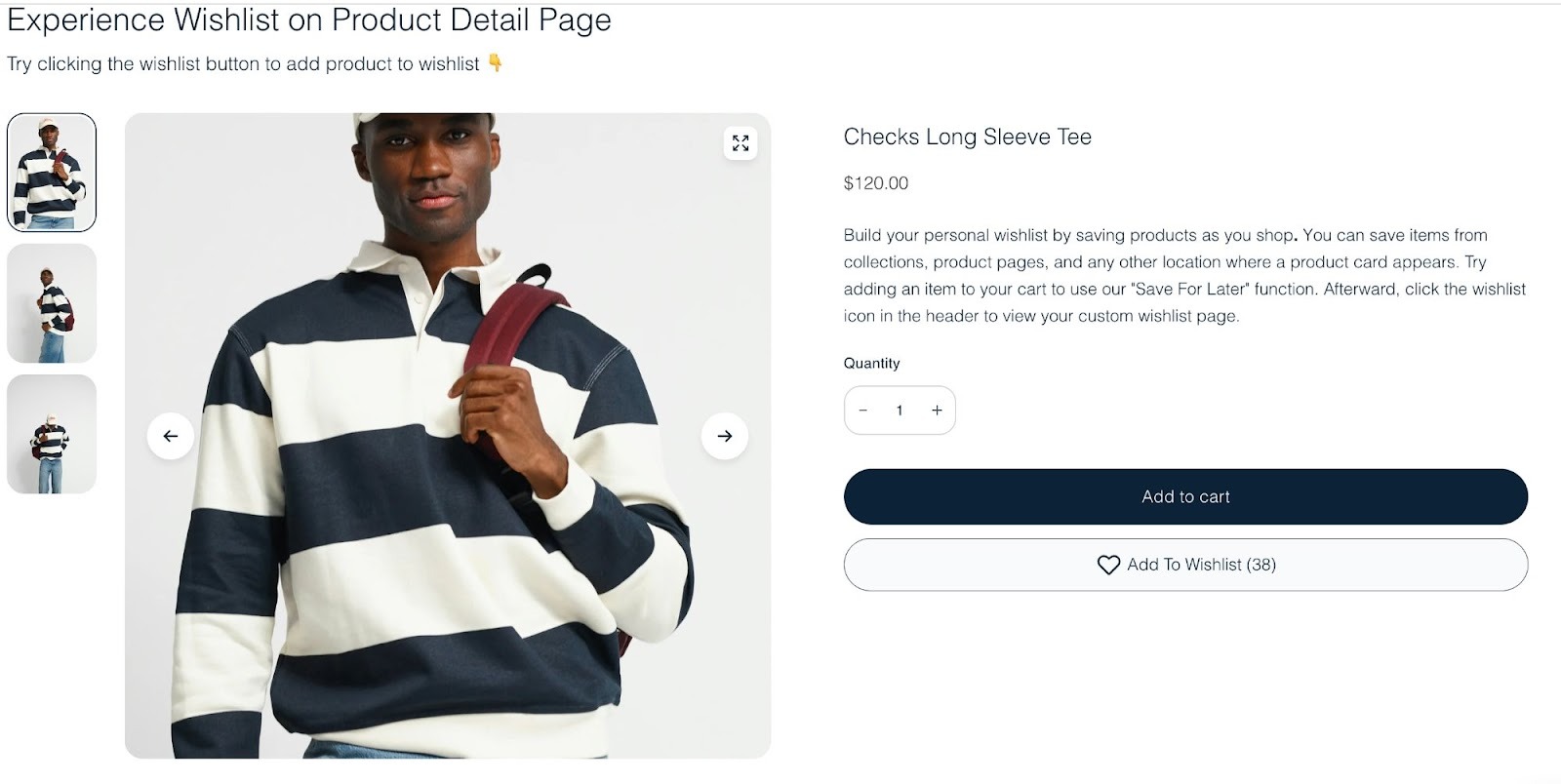
Merchants can deploy wishlist tools to capture buying signals at the user level while maintaining account-wide visibility for sales teams. This means that the procurement manager's saved list, the engineer's spec sheet downloads, and the finance approver's quote requests all appear as discrete signals that roll up to the same enterprise account.
Integration with B2B stacks is straightforward.
Swym connects to CRMs, ERPs, and marketing automation platforms, turning saved lists and alerts into actionable sales triggers. When a user from an enterprise account subscribes to a back-in-stock alert, the system can automatically notify the assigned account owner and append the signal to the company's record in Salesforce or HubSpot.
Account-specific pricing visibility is maintained without sacrificing personalization. Merchants can surface negotiated pricing tiers and approval workflows while still allowing individual users to curate their own product lists and receive personalized alerts based on their role.
Capture the Products your Shoppers Truly Love
Swym Wishlist Plus lets shoppers save products they love, ensuring valuable customer intent is never lost and ready to convert.

.png)