 Blog Home
Sales Intent Data: How to Convert High-Intent Shoppers
Learn how sales intent data identifies ready-to-buy customers and converts them faster.

Our most recent articles
Most merchants know who visited their site, but they have no idea who is actually ready to buy.
Google Analytics tells you how many sessions happened. Heatmaps show where people clicked. But neither tool reveals the shopper who is three days away from making a decision, waiting for the right trigger to commit.
Sales intent data solves this by surfacing the shoppers who have moved beyond casual browsing and are actively signaling purchase readiness.
This article shows exactly which intent signals matter, how to capture them without complex infrastructure, and how to turn them into revenue using automated triggers that meet shoppers at the exact moment they are ready to buy.
What is Sales Intent Data?
Sales intent data is a collection of behavioral and declarative signals that indicate a shopper is moving toward a purchase decision.
It differs from general engagement metrics like page views or time on site because it is predictive, not descriptive. While intent data captures a wide range of engagement signals, sales intent data specifically focuses on actions that predict purchase readiness. It tells you who is likely to buy, not just who visited.
There are two types of sales intent signals:
- Behavioral intent signals include actions like adding to cart, viewing the same product across multiple sessions, or spending significant time on product pages. These are passive signals inferred from user activity.
- Declarative intent signals include wishlist saves, back-in-stock requests, price drop alerts, and list creation. These are shopper-initiated actions that explicitly state future purchase interest.
Declarative signals are more reliable because they require the shopper to take a deliberate action. A shopper who saves a product is making a conscious decision to remember it for later. This is far stronger than passive scroll behavior that could indicate interest or distraction.
The shift from third-party tracking to zero-party data has made declarative signals even more valuable. Privacy regulations have reduced the effectiveness of behavioral inference, but a shopper who subscribes to a back-in-stock alert is self-identifying their readiness to buy regardless of cookie policies.
Why Sales Intent Data Matters for Conversion
Most merchants are stuck in a traffic acquisition loop, paying to re-attract shoppers who already expressed interest.
Sales intent data breaks this cycle by allowing merchants to nurture existing demand instead of constantly chasing new visitors.
The average customer journey now takes 41 days. And modern shoppers require 6-8 touchpoints before a sale. Sales intent data is what stitches those interactions into a coherent buying journey.
If you cannot capture their intent during the research phase and reactivate it later, you lose them to a competitor or to decision fatigue.
Merchants who ignore intent signals are essentially resetting the shopper's journey with every visit. The shopper has to rediscover products they already liked, rebuild carts they already curated, and remember details they already evaluated.
Every time a shopper has to start over, the likelihood of completing the purchase drops. Sales intent data eliminates this friction by preserving context and making every return visit a continuation rather than a restart.
How to Identify High-Intent Shoppers
Not all signals carry the same predictive weight. High-intent shoppers reveal themselves through specific actions that indicate deliberate consideration and conditional purchase readiness.
1. Wishlist and Save Signals
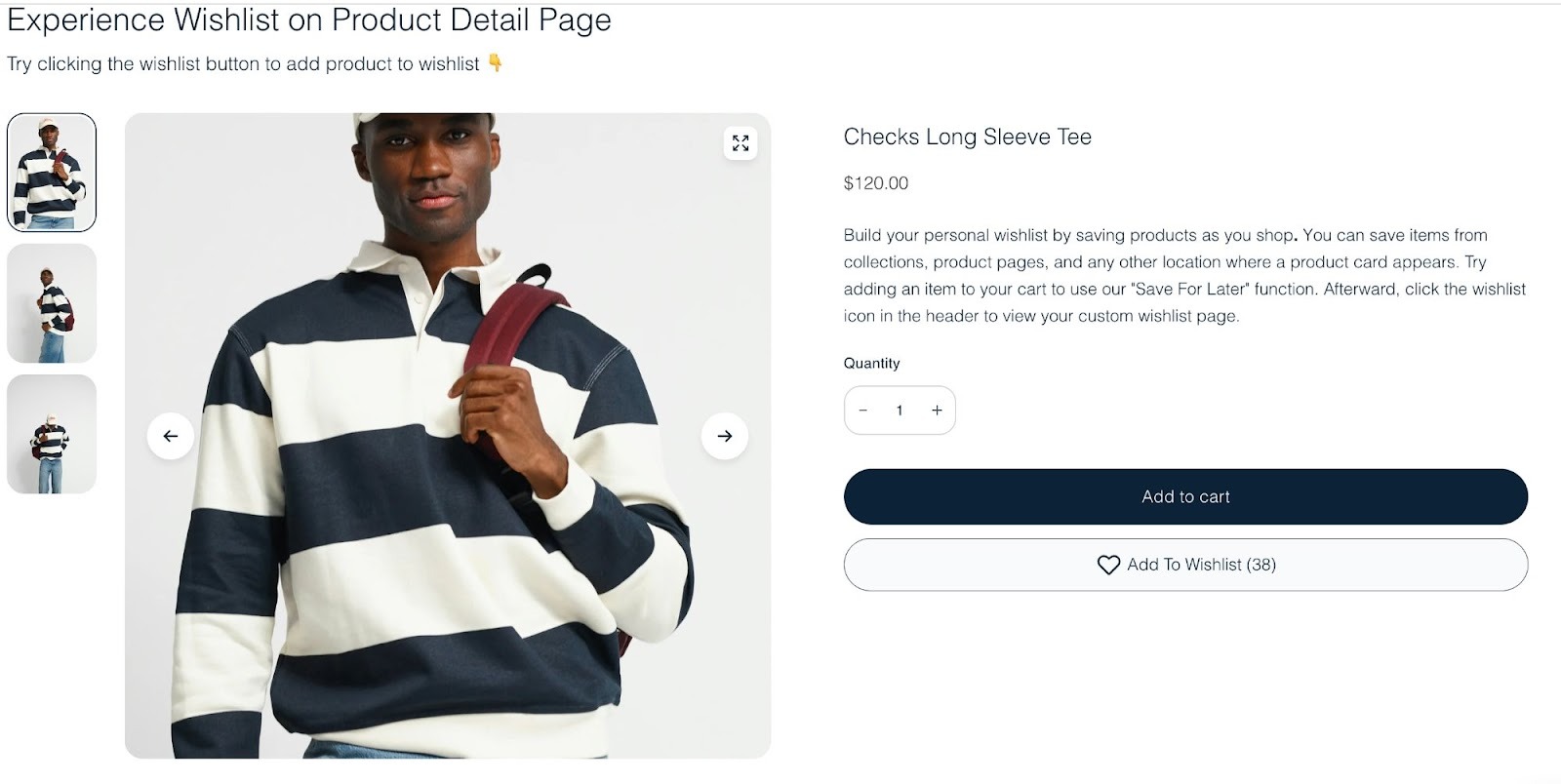
A shopper who saves a product is declaring future purchase interest. They are not ready to buy now, but they want to remember the item for when they are.
These saves are a clear indicator of purchase intent, often more reliable than cart additions because they reflect deliberate curation rather than exploratory behavior. Merchants who track wishlist activity can see which products are generating the most saves, which variants are most popular, and which shoppers have the deepest intent across multiple categories.
Data shows that shoppers who engage with wishlist features have a 70% higher basket density compared to general site visitors. They do not just buy the item they saved. They often add complementary products when they finally decide to purchase.
Back-in-Stock and Price Drop Requests
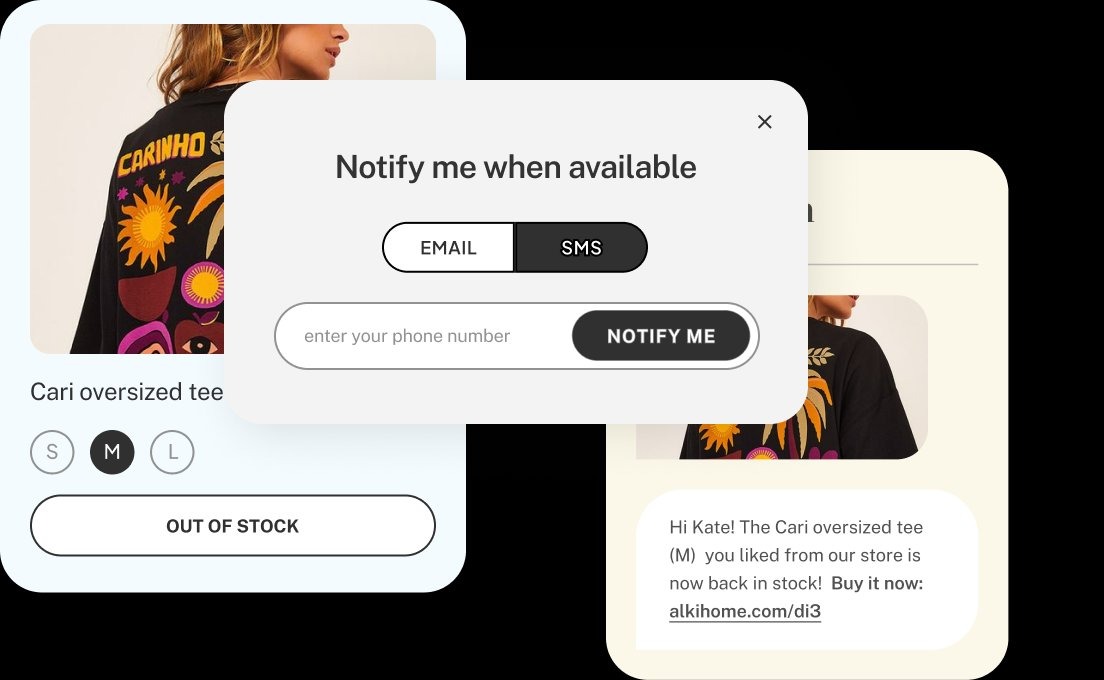
When a shopper subscribes to a back-in-stock or price drop alert, they are telling you exactly what would make them buy.
This is intent with a condition. The shopper is ready, but blocked by availability or price. Remove the block, and conversion is nearly guaranteed. Alert subscriptions are among the clearest buying signals a merchant can capture, representing conditional intent that converts the moment the barrier is removed.
Back-in-stock emails from intent-driven platforms see open rates around 79% and conversion rates near 20%, far exceeding standard email campaign benchmarks. This happens because the shopper explicitly asked to be notified. They want the message.
Repeat Visits to Specific Products
A shopper who returns to the same product page across multiple sessions is signaling high intent even if they have not saved or subscribed.
This behavior indicates deliberation and comparison. They are weighing options, checking details, and coming back to confirm their decision. Merchants should flag these shoppers for retargeting or proactive engagement before the consideration window closes.
Repeat visits combined with other signals like extended time on the product description or review sections indicate a shopper who is past the awareness stage and deep into evaluation.
High Engagement with Product Details
Time spent reading reviews, zooming on product images, or checking size guides indicates a shopper is past the awareness stage.
They are evaluating fit and suitability. This is a strong secondary signal that should trigger nurture sequences designed to remove uncertainty and build confidence in the purchase decision.
Shoppers who interact with product specification sections are often comparing across multiple brands or deliberating between variants. They need reassurance, not another discount code.
How to Capture Sales Intent Data
Capturing intent data requires giving shoppers explicit tools to express their interest. Passive tracking alone is not enough.
Merchants need to offer wishlist functionality that syncs across devices and persists across sessions. Without the right tools, much of this latent shopper intent remains invisible, and the revenue opportunity slips away as shoppers move on to competitors who make it easier to save and return.
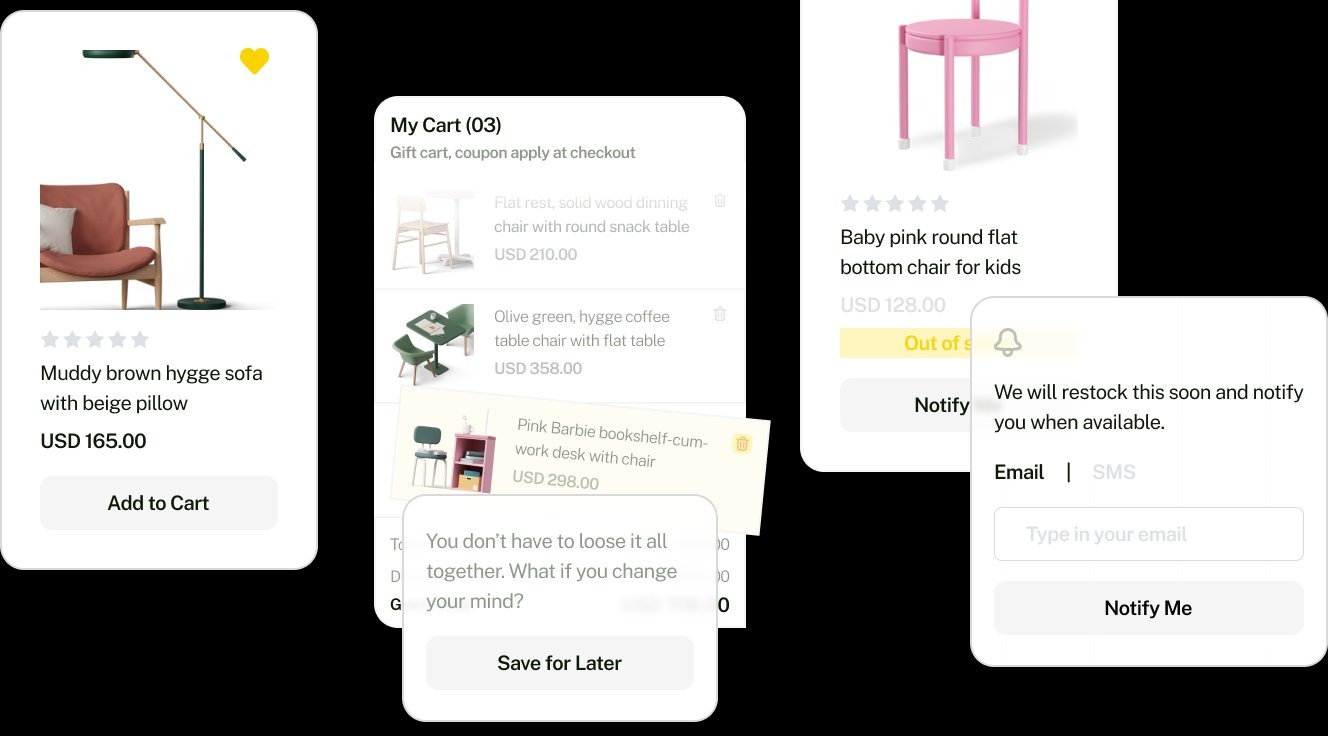
- Back-in-stock alert forms should appear directly on out-of-stock product pages with one-click subscription that does not require account creation. Price drop subscription options should be available on product pages or integrated into wishlists so shoppers can set conditional triggers for when they are ready to buy.
- Cross-device accessibility is non-negotiable. A shopper who saves three items on their phone during a commute expects to see those same items when they log in on their laptop at home or walk into a physical store equipped with Shopify POS. If the context does not follow them, the intent signal becomes worthless. The shopper has to rebuild their mental shopping list from memory, and most will not bother.
- These tools must be frictionless. If a shopper has to create an account before saving an item, most will abandon. Guest wishlist capabilities and one-click alert subscriptions remove barriers to intent capture without sacrificing data quality.
How to Activate Sales Intent Data for Revenue
Capturing the signal is only the first step. Activation is where revenue happens.
Without automated systems to act on intent signals, merchants are left with a database of interested shoppers and no mechanism to convert them. Most high-intent shoppers will leave your site before buying unless you meet them with the right message at the right time.
Automated Triggered Campaigns
Intent signals should trigger personalized email or SMS sequences that re-engage shoppers based on their specific actions.
A shopper who saves a product should receive a reminder email if they have not purchased within 7 days. The key is to turn window shoppers into buyers by meeting them with the right message at the moment their blockers are removed.
A shopper who subscribes to a back-in-stock alert should be notified the moment inventory is replenished, with a direct link to the product in their preferred variant. The email should acknowledge that they asked to be notified and make it effortless to complete the purchase.
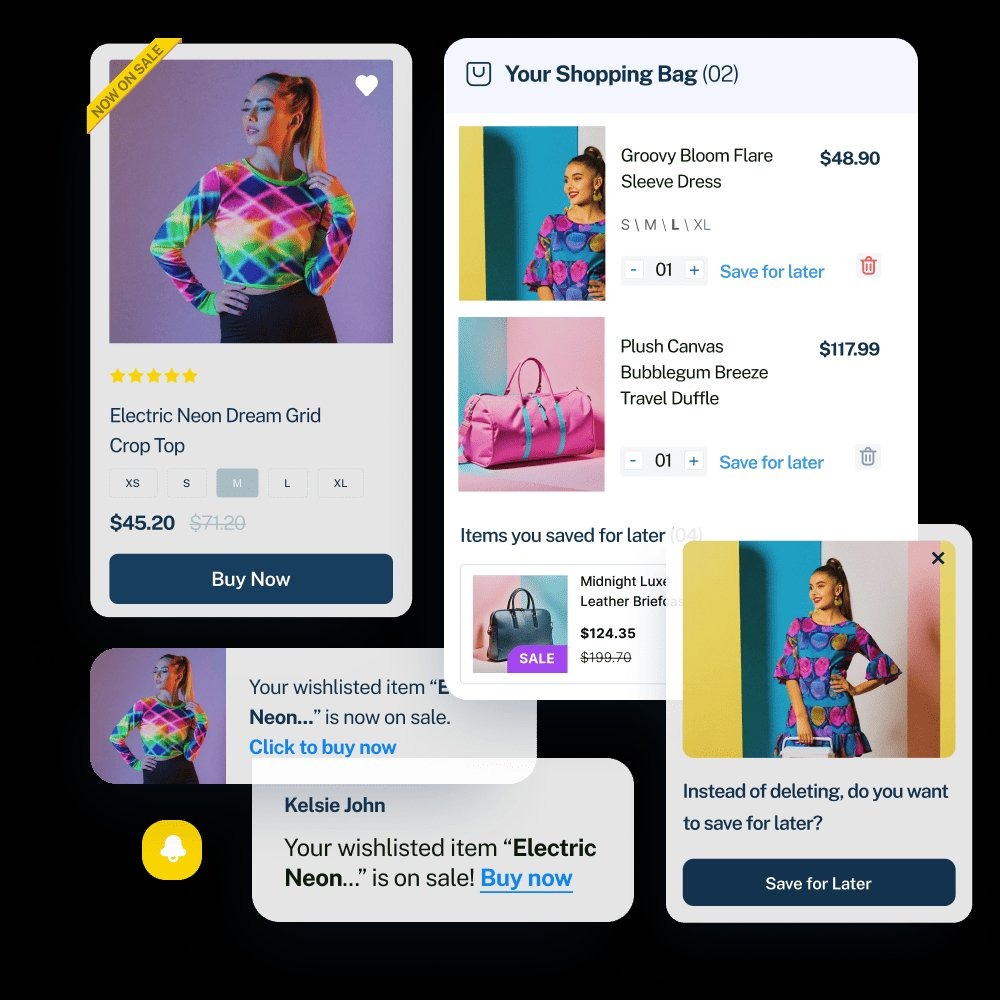
Price drop alerts should trigger automatically when a wishlisted item goes on sale. The message should emphasize scarcity if the discount is time-limited or inventory-constrained.
These campaigns outperform broadcast emails because they are based on declared interest rather than guesswork. The shopper has already told you what they want. You are simply closing the loop.
Dynamic Segmentation in Marketing Platforms
Sync intent data into Klaviyo, Attentive, or your CDP to create high-intent segments that receive different messaging than cold audiences.
A shopper with three wishlisted items is a warm lead, not a stranger. They should receive content that acknowledges their existing interest and removes the final barriers to purchase. Segmentation based on the depth of intent allows you to allocate marketing spend more efficiently by focusing high-touch engagement on shoppers who are closest to conversion.
Dynamic segmentation also allows you to test messaging strategies. High-intent shoppers might respond better to urgency-driven copy, while lower-intent shoppers need more educational content.
Integration with platforms like Klaviyo and Attentive means you can activate intent data without building custom infrastructure. The signals flow automatically from your wishlist and alert tools into your existing email and SMS workflows.
On-Site Personalization
Show shoppers their saved items when they return to the site. Display personalized recommendations based on wishlist content.
If a shopper saved a dress, show complementary accessories. This reduces the friction of re-discovery and increases basket density by surfacing products the shopper is statistically more likely to buy based on their declared preferences.
On-site personalization also includes surfacing wishlisted items in prominent positions on the homepage or category pages. The shopper should not have to remember what they saved or navigate back to their wishlist manually. Bring the saved items to them.
Cross-Channel Continuity
Ensure that intent captured on mobile is visible when the shopper switches to desktop or visits a physical store via Shopify POS.
Journey continuity eliminates the frustration of starting over and preserves momentum across the 6-8 touchpoints required for conversion. A shopper who saved items on mobile should see those same items highlighted when they log in on desktop or when a store associate looks up their account in-store.
This level of continuity requires backend synchronization that most generic wishlist apps do not support. The data must be persistent, device-agnostic, and accessible across every touchpoint where the shopper might engage.
Without cross-channel continuity, each session becomes a disconnected fragment. The shopper loses context, and the merchant loses the ability to build on previous interactions.
How to Measure the Impact of Sales Intent Data
Intent attribution allows merchants to prove ROI instead of guessing which campaigns drove revenue.
Track the conversion rate of intent-captured shoppers versus general site visitors.
Benchmark data shows intent-engaged shoppers convert at rates 2-3x higher than average, often reaching 30-35% conversion for well-activated intent signals.
Revenue per triggered alert is another key metric. Back-in-stock emails often generate $63 or more per alert because they target shoppers with explicit purchase readiness. This metric proves the direct revenue impact of capturing and activating declarative intent.
Average basket density for intent-engaged shoppers should be 15-25% higher than general site traffic. Platforms that capture high-intent shoppers with wishlist tools provide granular attribution, showing exactly which saved products converted and when. Shoppers who curate wishlists are planning multi-item purchases, not single-product transactions.
These metrics should be tracked at the product level, not just the aggregate. Knowing which products drive the most wishlist saves or back-in-stock requests helps inform inventory and merchandising decisions.
Swym's platform is purpose-built for this. It captures sales intent data the moment a shopper saves a product, subscribes to an alert, or creates a list. Those signals sync across devices and channels, ensuring journey continuity from mobile to desktop to in-store.
Activation happens automatically through integrations with Klaviyo, Attentive, and the rest of your existing stack. The result is measurable revenue from demand that was already present, just waiting to be reactivated.
Capture the Products your Shoppers Truly Love
Swym Wishlist Plus lets shoppers save products they love, ensuring valuable customer intent is never lost and ready to convert.